
Maritime
Credible, regulation-ready climate data for ships, equipment, and maritime supply chains. ReFlow provides the software and expertise to make that calculation tractable, defensible, and directly useful for regulatory reporting, procurement, and decarbonisation decisions.
.avif)
Definition
Maritime LCA applies ISO 14040/44 methodology to vessels, marine equipment, and offshore structures — mapping environmental impacts from raw material extraction through fabrication, operation, maintenance, and end-of-life scrapping. Results are expressed in kg CO₂e per functional unit: per gross tonne, per tonne-nautical mile, or per installed unit of equipment.

Key Challenges
Ships are among the most complex products ever built. Five factors distinguish maritime LCA from most other industrial applications:

Long operational lifespans (20–30 years) make use-phase modelling dominant and sensitive to fuel pathway assumptions
Multiple fuel scenarios must be modelled in parallel: HFO, LNG, methanol, ammonia, and hydrogen produce radically different lifecycle profiles
System boundaries are contested: vessel, cargo, port calls, and supply chain all have legitimate claims on emissions allocation
End-of-life varies dramatically by geography — from certified recycling in Europe to uncontrolled beaching elsewhere
Regulatory frameworks (IMO, EU ETS, CSRD) use different scopes and reference years, requiring careful data architecture from the start
Our Approach
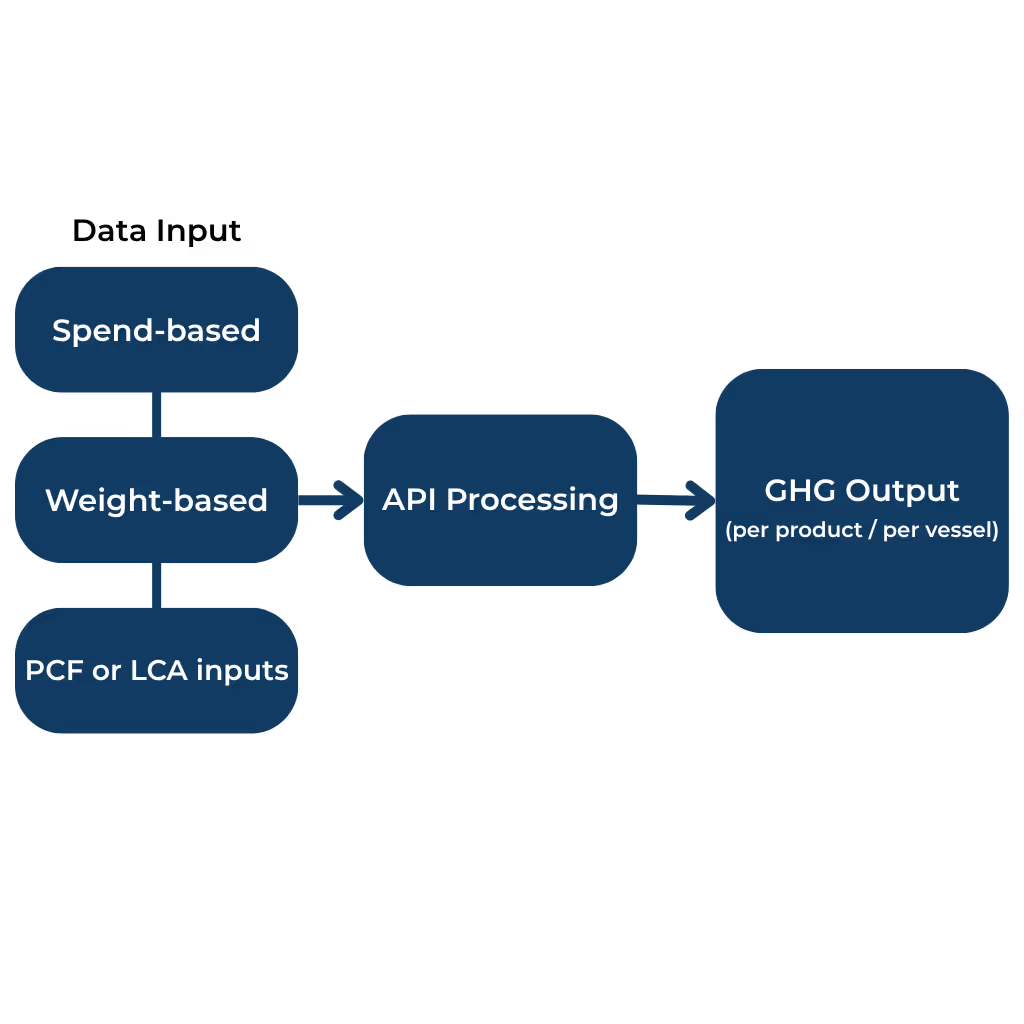
ReFlow combines LCA software with maritime domain expertise. Our platform combines AI-assisted data processing with ISO-compliant calculation logic — managing bills of materials and supplier emission factors at scale. Our advisory team ensures the methodology is defensible, audit-ready, and fit for the specific regulatory or commercial purpose.
Procurement
Procurement decisions shape a vessel’s carbon footprint long before it enters service. ReFlow enables shipowners to request, collect, and verify Product Carbon Footprint (PCF) data from equipment and component suppliers — in a standardized format aligned with ISO 14067 and ready for regulatory reporting.
Send structured data requests to equipment and component suppliers directly through the platform, with clear format requirements attached.
Standardized methodology ensures supplier submissions are comparable, traceable, and audit-ready across your entire fleet.
Monitor which suppliers have submitted data, follow up on missing responses, and maintain a complete record for compliance and reporting.
Verified supplier data integrates directly into your overall lifecycle assessment, closing the loop on Scope 3 emissions.
Use Cases
Demand for verified maritime emission data is now coming from four directions simultaneously: regulation, financing, procurement, and customer pressure.
Vessel carbon footprints for CSRD reporting, green loan eligibility, and portfolio decarbonisation targets
Product-level PCF certificates for customer procurement requirements and EPD certification
Newbuild LCA for green financing, Poseidon Principles compliance, and sales differentiation
Component-level emission data for Tier 1 customer requirements and tender qualification
Get Started
Talk to our LCA team, or start with 5 free product carbon footprint calculations.