Spend-based EEIO factors carry 40 to 80 percent uncertainty for maritime procurement. A real mid-sized shipowner case study, the regulatory direction of travel, and a practical path from estimates to primary data.
Most shipowners calculate Scope 3 Category 1 using spend-based EEIO methods a valid starting point that carries ±40–80% uncertainty. This article examines the structural reasons for that uncertainty, presents findings from a real mid-sized shipowner dataset, and outlines a practical path toward primary supplier data.
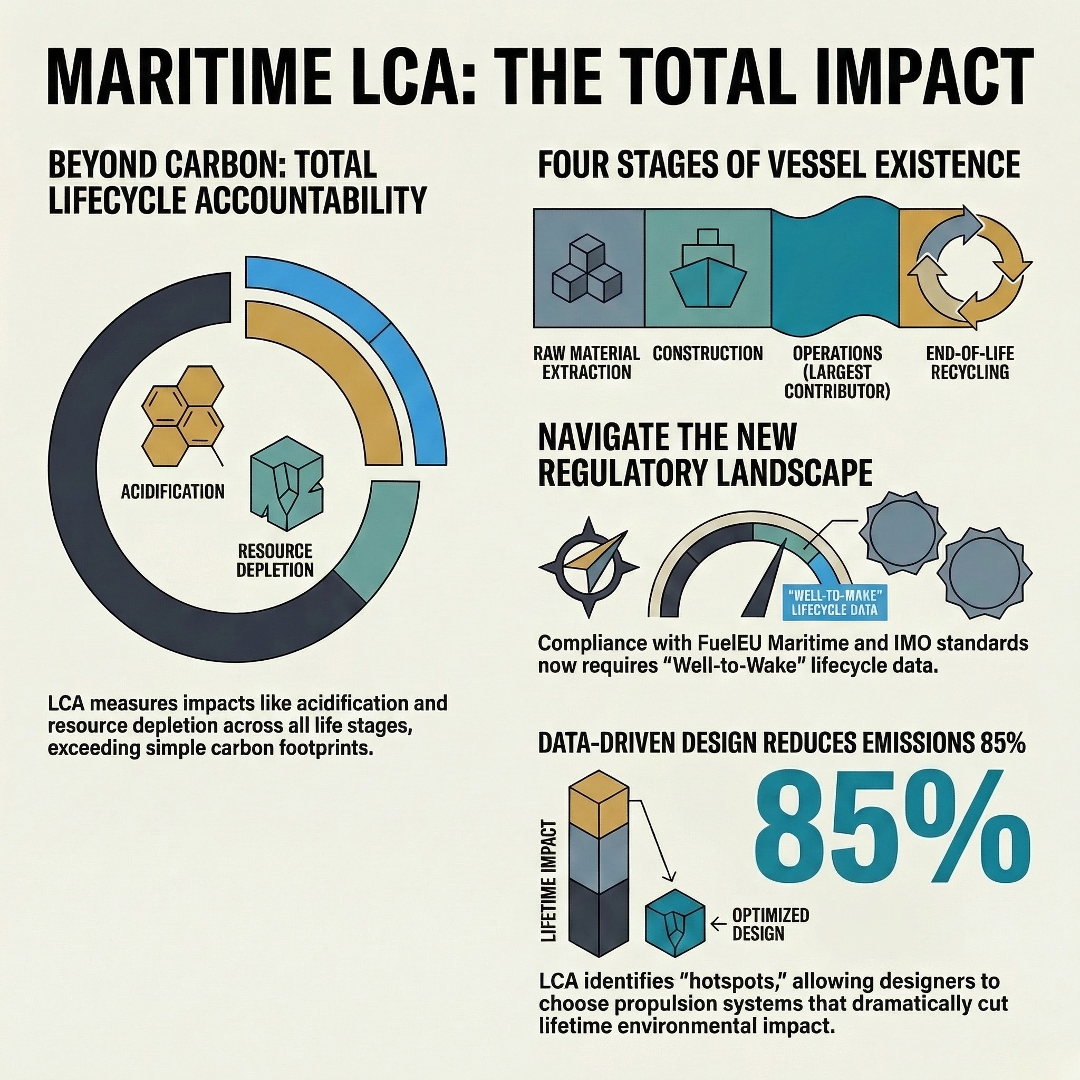
A vessel LCA evaluates the full environmental impact of a ship across its lifetime. This article explains the methodology, what it covers, and why it is increasingly required for compliance and financing.
A practical guide to maritime LCA and ship lifecycle assessment. Learn what a vessel LCA involves, how it supports compliance with FuelEU Maritime and EU ETS, and where it creates value for shipowners, designers, and suppliers.
Spend-based emission estimates are a practical starting point, but they can differ significantly from actual product carbon footprints. This article explains where the gaps arise and how to close them.
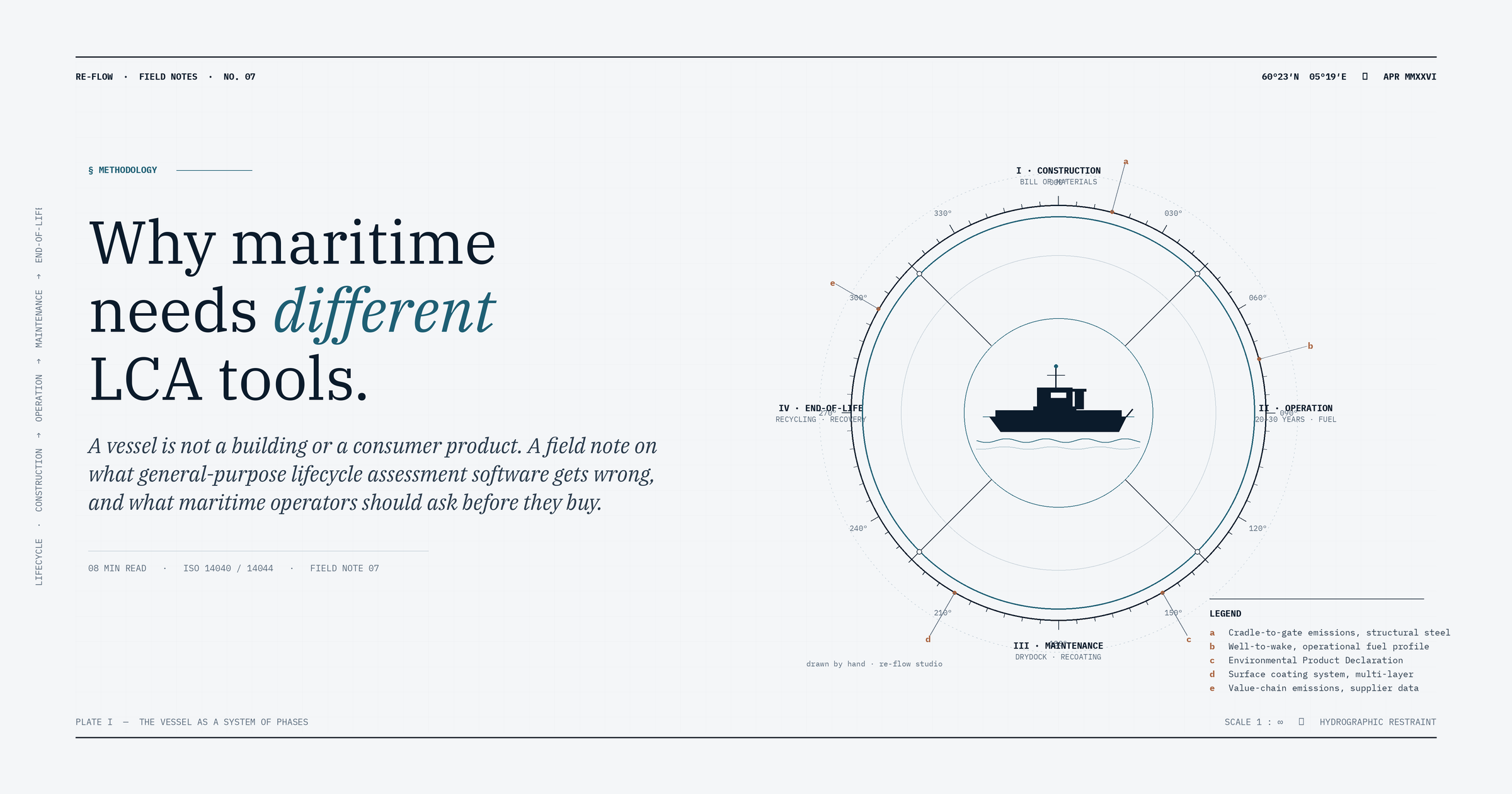
Most LCA software is designed for construction or FMCG. Maritime has different needs: vessel-level assessments, maritime databases, Scope 3 supply chain data, and regulatory alignment. Here is what to evaluate.
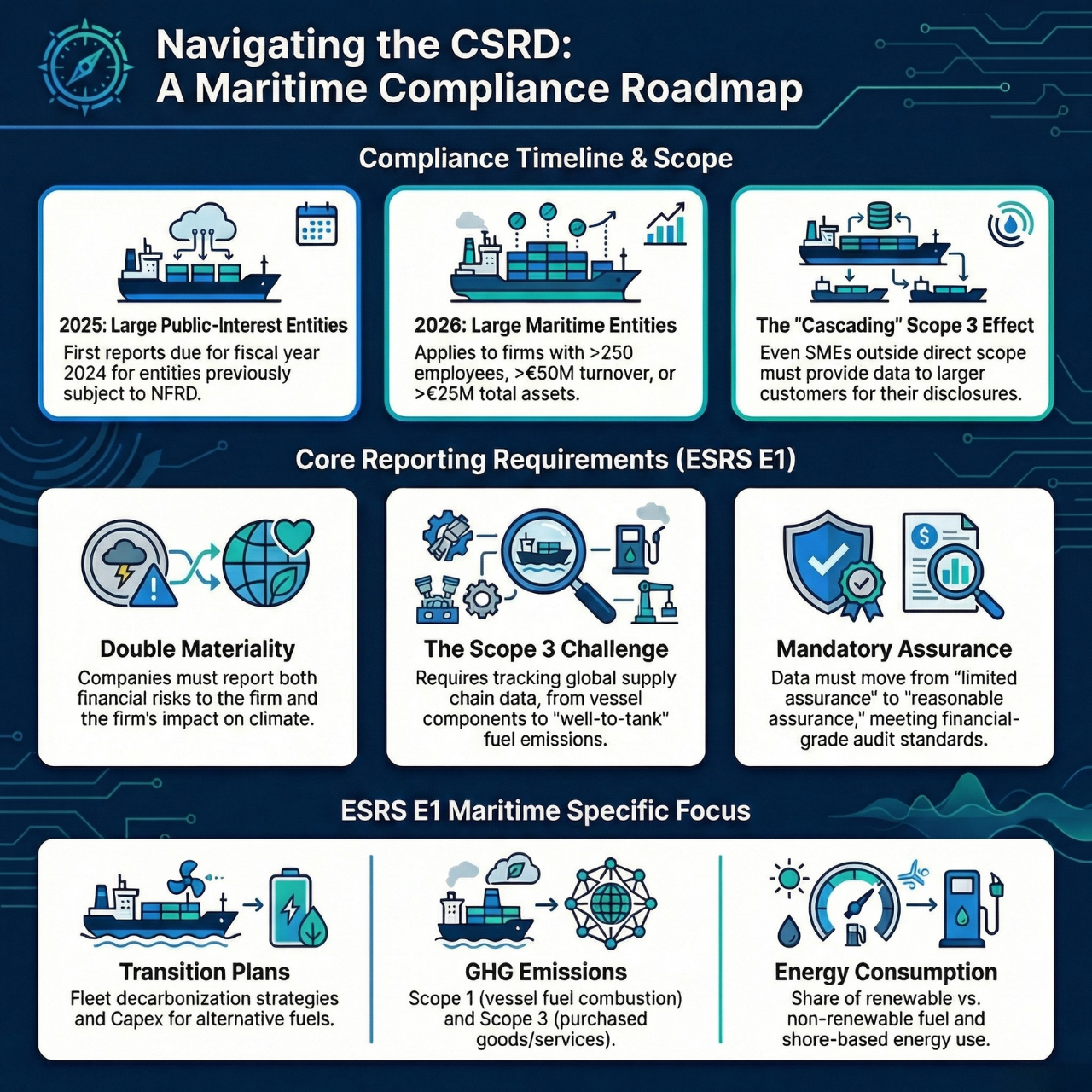
CSRD introduces mandatory sustainability reporting for large companies, including maritime. This guide covers which shipping companies are in scope, what ESRS E1 requires, and how to build a credible disclosure.
The CSRD value-chain cap limits what large maritime companies can formally demand from suppliers under the Omnibus. But the commercial and regulatory pressure for product climate data has not gone away. This practical guide tells maritime suppliers what to prepare, and when.
The CSRD Omnibus introduced a value-chain cap that limits what CSRD-reporting companies can demand from smaller suppliers. For maritime OEMs and equipment providers, understanding what this means in practice — and why quality product climate data still matters commercially — is essential reading.